
Veneers vs. Crowns: Which One Does Your Smile Actually Need?
- Jun 13, 2026
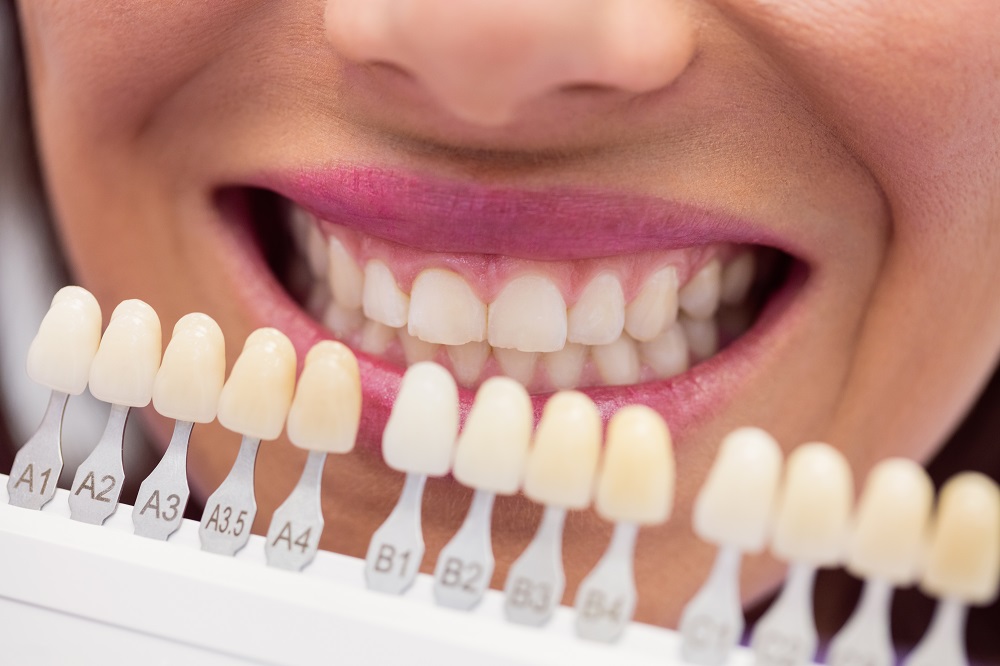
Both veneers and crowns can completely transform the way your smile looks. But they serve very different purposes, and choosing the wrong one can lead to unnecessary tooth reduction, higher costs, or a result that simply does not hold up the way it should. The decision is not just about aesthetics. It involves your tooth structure, bite mechanics, long-term dental health, and the specific problems you are trying to solve.
At Simaya Prosthodontics, Dr. Kumar Patel helps patients throughout Marietta and Newnan navigate exactly this decision every day. The right choice between veneers vs crowns in Marietta GA depends on factors that go well beyond how your smile looks in the mirror. Here is a clear, honest breakdown of both options, when each is appropriate, and why getting this decision right from the start makes all the difference.
What Is a Dental Veneer?
A dental veneer is a thin shell of porcelain, or in some cases composite resin, that is bonded to the front surface of a tooth. Think of it as a precisely crafted facade that improves the appearance of a tooth without altering its underlying structure in any significant way.
Veneers are a minimally invasive treatment. To place a veneer, a small amount of enamel is removed from the front of the tooth, typically less than a millimeter, to create space for the veneer to sit flush and feel natural. The porcelain is then custom-fabricated to match the shade, shape, and translucency of your surrounding teeth before being permanently bonded in place.
The primary purpose of a veneer is cosmetic. It is designed to address visible imperfections on teeth that are otherwise structurally healthy. Common candidates include teeth with stubborn discoloration that does not respond to whitening, minor chips or cracks on the front surface, gaps between teeth, and teeth that are slightly misshapen, uneven, or shorter than desired.
What veneers are not designed to do is restore a tooth that has been structurally compromised. If a tooth has significant decay, a large crack, or has been weakened by prior dental work, a veneer does not provide the protection or support that tooth needs. Applying a veneer in that situation is a bit like repainting a wall that has structural damage behind it. It may look better temporarily, but it does not address what actually needs to be fixed.
What Is a Dental Crown?
A dental crown is a full cap that covers the entire visible portion of a tooth from the gum line up. Unlike a veneer, which only addresses the front surface, a crown encases the tooth completely, restoring both its appearance and its structural integrity.
Placing a crown requires more significant tooth preparation. A meaningful amount of enamel is removed from all sides of the tooth so the crown can fit over it securely. This is a greater commitment than a veneer and is not reversible, but it is also a more comprehensive solution when the tooth genuinely needs it.
Crowns restore both function and aesthetics simultaneously. They are the appropriate treatment when a tooth is severely cracked or broken, when a large filling needs to be replaced and there is not enough natural tooth structure remaining to support another filling, after a root canal procedure when the tooth becomes brittle and vulnerable, to cap a dental implant, or when bite correction is needed alongside cosmetic improvement.
Because a crown covers the entire tooth, it also provides protection against further damage. For a tooth that has already been compromised, a crown is not just a cosmetic upgrade. It is a functional restoration that extends the life of the tooth and prevents more serious problems from developing down the line.
Veneers vs. Crowns: Side-by-Side Comparison
Understanding the practical differences between these two restorations helps clarify which one is suited to your situation.
In terms of coverage, a veneer addresses only the front surface of the tooth, while a crown encases the entire tooth. In terms of tooth preparation, veneers require minimal enamel removal, while crowns require more significant reduction on all sides. Their primary purposes differ as well: veneers are primarily cosmetic, while crowns serve both a functional and cosmetic role.
Veneers are best suited for stains, chips, gaps, and cosmetic reshaping on structurally sound teeth. Crowns are better suited for cracked teeth, significant decay, post-root canal protection, implant restoration, and situations where both appearance and structural integrity need to be addressed. Both veneers and crowns carry a lifespan of 10 to 20 years or more with proper care. However, crowns have a slight durability advantage in high-stress situations because of their full coverage. Veneers cannot correct bite issues, while crowns can be shaped as part of a broader bite correction plan.
When Your Dentist or Prosthodontist Recommends a Veneer
A veneer is the right recommendation when the goal is cosmetic and the tooth is healthy enough to support it. If you have discoloration that has not responded to professional whitening, whether from tetracycline staining, fluorosis, or simply intrinsic color your teeth have always had, veneers can create a permanently brighter, more even appearance.
Minor chips or surface cracks on front teeth are excellent candidates for veneers, provided the damage is limited to the outer surface and has not compromised the tooth’s internal structure. Gaps between teeth, a condition called diastema, can often be closed with veneers as an alternative to orthodontic treatment when the spacing is modest. Slightly misshapen or uneven teeth, teeth that appear too short, or teeth with an irregular surface texture are also cases where veneers deliver a natural-looking, lasting improvement.
The key requirement in all of these scenarios is that the tooth itself is structurally sound. Healthy enamel, no significant decay, no deep cracks, and enough surface area for the veneer to bond properly are the conditions that make this treatment both appropriate and durable.
When a Crown Is the Better Choice
A crown becomes the better choice when a tooth needs more than cosmetic improvement. If a tooth is severely cracked, the crack may extend in ways that put the entire tooth at risk. A crown holds the tooth together, prevents the crack from propagating, and protects against fracture under normal biting pressure.
Teeth that have large existing fillings, particularly those covering a significant portion of the tooth’s surface, often do not have enough remaining natural structure to support another filling. A crown in this case is the most conservative way to protect what remains and restore full function.
After a root canal, the tooth loses much of its moisture and becomes more brittle than a living tooth. Without the protection of a crown, a root canal-treated tooth is significantly more likely to fracture. Crowning the tooth after root canal treatment is standard clinical practice for this reason.
Dental implants are always restored with a crown. The crown is the visible, functional portion of the implant that looks and works like a natural tooth. And when a patient needs bite correction alongside cosmetic improvement, a crown can be shaped to alter the tooth’s height and contact with opposing teeth in ways that a veneer cannot.
Can You Get Both? Smile Makeovers at Simaya Prosthodontics
Many patients who come to Simaya Prosthodontics for a smile makeover end up with a combination of both veneers and crowns as part of a comprehensive treatment plan. This is very common in full smile transformations.
A typical approach might involve porcelain veneers on the front teeth where cosmetic improvement is the primary goal and the teeth are structurally healthy, combined with crowns on back teeth or any front teeth that have existing damage, significant decay, or structural compromise. The result is a smile that looks cohesive and natural because every visible tooth has been addressed, but each tooth has been treated in the way that is most appropriate for its specific condition.
This kind of combination treatment requires a high level of planning and expertise. The teeth need to work together as a system. Bite forces, tooth proportions, gum levels, and facial aesthetics all need to be considered as part of the overall design, not addressed tooth by tooth in isolation. This is exactly the type of case where a prosthodontist’s specialized training makes a significant difference in the outcome.
Why a Prosthodontist Is the Right Specialist for This Decision
General dentists are trained to place both veneers and crowns, and many do excellent work. But prosthodontists complete an additional three years of specialty training beyond dental school with a specific focus on the restoration and replacement of teeth, complex aesthetics, and the mechanics of how teeth function together as a system.
When you are deciding between veneers and crowns, or considering a combination treatment that involves multiple teeth, the factors that determine the right plan go well beyond what each individual tooth looks like. A prosthodontist evaluates tooth structure, gum health, bite force, how your upper and lower teeth meet, and how your smile interacts with your facial proportions, all as part of a holistic assessment.
Dr. Kumar Patel at Simaya Prosthodontics brings this level of specialist evaluation to every patient in Marietta and Newnan. The goal is not just a smile that looks beautiful on the day of placement. It is a result that holds up over years of normal use, ages well, and was built on the right clinical foundation from the beginning.
Conclusion
Veneers and crowns are both excellent dental restorations, but they are not interchangeable. A veneer is a cosmetic tool designed for healthy teeth that need visual improvement. A crown is a functional and aesthetic restoration designed for teeth that need structural support alongside cosmetic enhancement. Using one where the other is indicated does not just affect the appearance of the result. It affects how long it lasts, how it performs under daily use, and whether it actually solves the problem you came in to fix.
The best way to know which option is right for your smile is to have it evaluated by someone with the training to look at the full picture. At Simaya Prosthodontics in Marietta, Dr. Kumar Patel assesses every patient’s tooth structure, bite mechanics, gum health, and aesthetic goals before making a recommendation. The result is a treatment plan built around what your smile actually needs, not what happens to be the most convenient or the most expensive option on the menu.
If you have been weighing veneers vs crowns and are not sure which direction makes sense for you, a smile consultation with Dr. Patel is the clearest path to an answer you can trust. Simaya Prosthodontics serves patients throughout Marietta, Newnan, and greater Georgia. Book your consultation today and take the first step toward a smile that is both beautiful and built to last.
FAQ:
1. Are veneers reversible?
No. Because placing a veneer requires removing a small amount of enamel from the tooth’s surface, the process is permanent. Enamel does not grow back, which means the tooth will always need to be covered by a veneer or another restoration going forward. This is an important consideration before committing to the treatment. However, when veneers are placed correctly on appropriate candidates by a skilled prosthodontist, they can last 15 to 20 years or more, making the permanence a worthwhile trade-off for most patients seeking long-term cosmetic improvement.
2. Do veneers look natural?
Yes, high-quality porcelain veneers are designed to closely replicate the appearance of natural tooth enamel. Porcelain reflects light in a way that is similar to natural teeth, and each veneer is custom-fabricated to match the shade, shape, and translucency of the surrounding teeth. When designed and placed by a specialist with a strong aesthetic eye, veneers are virtually indistinguishable from natural teeth. The key is working with a provider who takes the time to design the shade and contour carefully rather than applying a one-size-fits-all approach.
3. Can I get veneers if I grind my teeth?
Bruxism, or chronic tooth grinding, is a significant consideration when evaluating someone for veneers. The forces generated during grinding can chip, crack, or debond veneers over time, significantly reducing their lifespan. Before recommending veneers for a patient who grinds their teeth, Dr. Patel will evaluate the severity of the bruxism and the condition of the existing teeth. In some cases, a night guard worn during sleep is sufficient protection to make veneers viable. In other cases, crowns may be a more durable choice given the increased bite forces involved.
4. How long do dental crowns last?
With proper care, dental crowns typically last between 10 and 20 years, and many last considerably longer. The lifespan of a crown depends on the material used, the skill of the placement, the location in the mouth, and how well the patient maintains their oral hygiene and attends regular dental check-ups. Crowns on back teeth experience greater chewing forces and may wear more quickly than those on front teeth. Avoiding habits like chewing ice, grinding teeth without a night guard, or biting very hard foods extends the life of any crown significantly.
5. What is the difference between a cosmetic dentist and a prosthodontist?
The term cosmetic dentist is not a recognized dental specialty. Any general dentist can describe themselves as a cosmetic dentist regardless of additional training. A prosthodontist, by contrast, is a board-recognized dental specialist who has completed three additional years of full-time graduate training specifically focused on the restoration and replacement of teeth, complex smile design, and the mechanics of occlusion. When the treatment involves multiple teeth, a combination of restorations, or a full smile makeover, a prosthodontist’s specialized training provides a meaningful advantage in both the planning and the outcome.